
(A) Inductively Coupled Plasma Mass Spectrometry (ICP-MS)

ICP-MS is a method used to quantify most elements in the periodic table. It uses argon plasma to form ions from samples. The ions are then analysed with mass spectrometry.
Pros: Requires very small amount of sample
Cons: Certain elements cannot be analysed
(B) High Performance Liquid Chromatography (HPLC)

HPLC is a chromatographic method which is able to be used to quantitate the concentration of p-phenylenediamine in samples.
Pros: Does not require much pre-treatment for sample, accurate injection even with manual injection with Rheodyne loop injector
Cons: Samples have to be fully dissolved in aqueous solvents
(C) Gas Chromatography Mass Spectrometry(GC-MS)
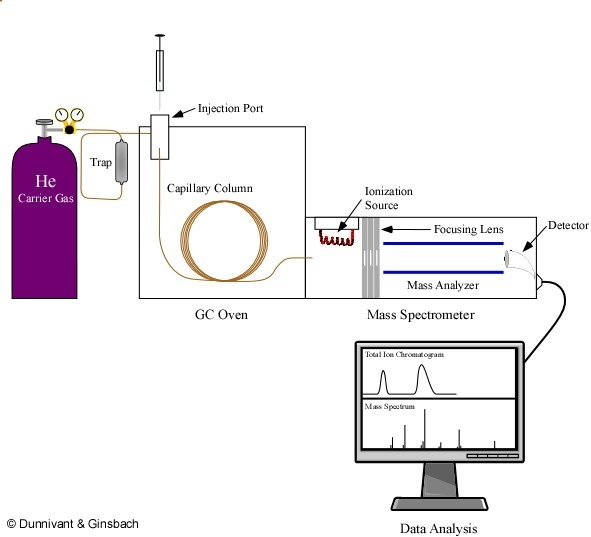
GC-MS is another viable chromatographic method able to quantitate the concentration of p-phenylenediamine. It uses a gaseous mobile phase.
Pros: Able to quantitate from peak area of retention time
Cons: Low-volatility samples require chemical derivatization

No comments:
Post a Comment